
 High School Musical
 High School Musical 2
 Camp Rock
 A Christmas Prince: The Royal Wedding2018 · 92 min
Movies made for television
Flood: television movies, from High School Musical, Lemonade Mouth and A Christmas Prince to Something the Lord Made and Persuasion, and where to watch them
180 television movies in eight currents, each with its cast, its rating and a Watch now button.
Eight currents
Christmas
Dive in (83)A Christmas Prince: The Royal Wedding2018 · 92 min A Christmas Prince: The Royal Baby2019 · 85 min
 Christmas with a View2018 · 90 min
 A Wish for Christmas2016 · 84 min
 A Royal Christmas2014 · 90 min
 12 Gifts of Christmas2015 · 84 min
 Midnight at the Magnolia2020 · 87 min
 Christmas Made to Order2018 · 83 min
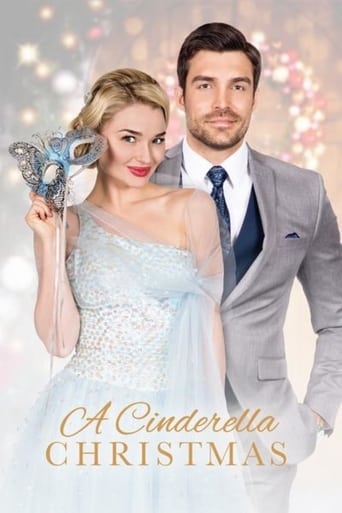 A Cinderella Christmas2016 · 93 min
 Christmas Wonderland2018 · 90 min
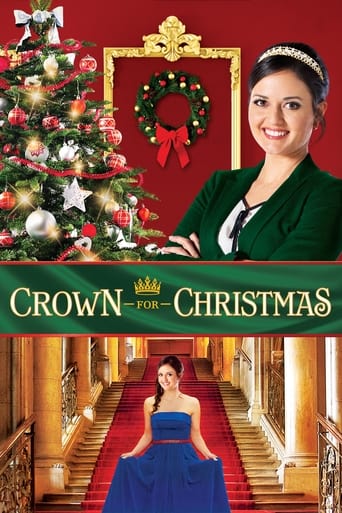 Crown for Christmas2015 · 84 min
 Christmas Under Wraps2014 · 88 min
School and teen
Dive in (29)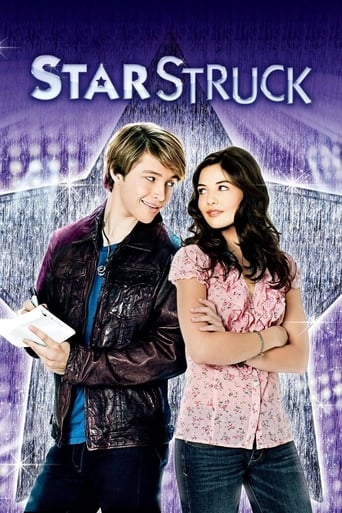




True stories
Dive in (14)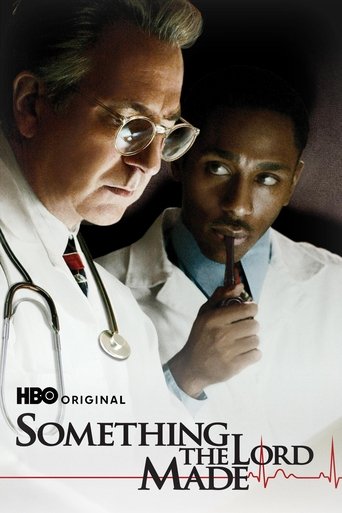


Royal romance
Dive in (17)


Romance
Dive in (116)



Top rated
Dive in (39)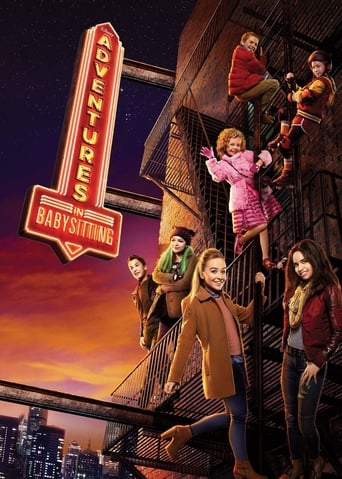



The Flood guide to television movies
Flood: television movies, from High School Musical, Lemonade Mouth and A Christmas Prince to Something the Lord Made and Persuasion
The television movie is the most underrated form in popular entertainment. It has smaller budgets than the cinema, shorter schedules and a very clear idea of its audience, and within those limits it has produced school musicals that a generation knows by heart, Christmas romances that families watch every December, and a handful of dramas as fine as anything shown in a theatre. Flood is a guide to that form. It lists 180 movies made for television between 1979 and today, the work of 125 directors and about 271 hours of viewing, and it sorts them into eight currents so that a visitor can find the right one quickly.
The largest current by far is Christmas, with eighty-three movies. School and teen has twenty-nine, Music twenty-two, Wishes and magic twenty-two, Royal romance seventeen, True stories fourteen, Weddings eleven and Jane Austen six. Taken as a whole, 116 of the movies are love stories, eighty-six are comedies and sixty-three are family films. Everything was chosen by hand for a household audience, and every movie has a page with its cast, its story, its rating and a Watch now button that leads to the official services carrying it.
This guide follows the currents in order, beginning with how the site works, and ends with questions and answers. For the practical steps alone, see the short page on how to watch with Flood.
How Flood works
The home page opens with a deep-blue panel that ends in a wave. It holds the heading and three featured stills from the most watched movies in the catalogue. Below it lie the eight currents, a row of rounded buttons, each with a number in a pale bubble showing how many movies it carries.
Rows of posters follow for Christmas, school and teen, true stories, royal romance, romance in general and the top rated. Each poster has three rounded corners and one square one, like a drop of water, and under it stand the title, the year and the running time, which for a television movie is usually close to an hour and a half.
Pressing a poster opens the movie's own page, where the summary sits beside the Watch now button and a country selector. Choose a country, press the button, and JustWatch opens with the subscription, rental, purchase and free services that carry the movie there. The search field understands seasons as well as names, so that typing Christmas, summer or wedding brings up the right shelf. The page on finding a movie lists every route, and My List explains the pool of saved titles.
The Christmas current
Eighty-three movies are set at Christmas, and the seasonal television romance is by now a tradition with its own conventions, as formal in its way as a pantomime. A woman with a demanding job in a large city is sent, a week or two before the holiday, to a small town with a great deal of snow. There she meets a man who makes something with his hands, a baker, a carpenter, an innkeeper, a vet. The town is preparing a festival that is in some kind of difficulty. By Christmas Eve the festival is saved, the job has been reconsidered, and it has begun to snow again.
Knowing the pattern is part of the pleasure, and the best examples bring real charm to it. In Snowed Inn Christmas, rated 6.9, two rival journalists are diverted by a storm to a historic inn in Indiana and set about saving it. Nostalgic Christmas, rated 7.0, concerns a toy-shop owner's daughter who comes home to help her father close the family business and finds reasons to keep it open. In Christmas in Evergreen, a vet in a Vermont town makes a wish on a snow globe on the night her plans to leave fall through, and Return to Christmas Creek sends a Chicago app designer back to the village of her childhood summers.
Travel provides a variation. The Christmas Train, from a novel by David Baldacci, puts a journalist, an old flame and a carriage of eccentrics on a sleeper from Washington to Los Angeles. Road to Christmas follows a television producer on a road trip to stage a live special, and Christmas with a View and Christmas at the Plaza are set in a ski resort and a grand New York hotel. Work provides another: the caterer of Catering Christmas, the designer of A Christmas Kiss, the architect of Christmas Made to Order, who hires a professional decorator when his family announces a visit.
A number of the Christmas movies stand out from the crowd. Dolly Parton's Christmas on the Square, from 2020, is a full musical, with fourteen new songs and Christine Baranski as a wealthy woman who returns to her home town intending to sell it. Call Me Claus, from 2001, stars Whoopi Goldberg as a shopping-channel producer who learns that she has been chosen as the next Santa. Babes in Toyland, from 1986, is a storybook fantasy with a very young Drew Barrymore and Keanu Reeves, and The Ultimate Christmas Present is a children's comedy about two girls who find a weather machine and make it snow in Los Angeles. The Christmas page sorts all eighty-three.
Christmas with a twist
The most inventive of the seasonal movies bend time. A Biltmore Christmas, from 2023, sends a screenwriter who is remaking a beloved old Christmas film back to 1947 and on to the set of the original, at a great house in North Carolina, where she falls for its leading man and worries about what her presence will do to the ending. Next Stop, Christmas puts its heroine on a commuter train that arrives ten years in the past, and Just in Time for Christmas shows a woman the life she would have if she took the job abroad. In A Dream of Christmas, a wife who wishes for a different life wakes up in it, and Christmas...Again?! has an eleven-year-old relive the day until she gets it right.
Smaller magic is everywhere. A key that opens doors to memories turns up in The Christmas Secret, rated 6.8. A woman too timid to speak her mind is granted forty-eight hours of perfect confidence in A Wish for Christmas. The heroine of Snowglobe steps inside the ornament on her shelf, and the elves of 48 Christmas Wishes set out to recover a bag of lost letters. Christmas Land bequeaths its heroine a whole Christmas village, and Northpole: Open for Christmas an inn whose heating runs on festive spirit.
Several performers are almost a guarantee of the genre. Lacey Chabert appears in nine movies on Flood, more than anyone else, among them A Royal Christmas, A Wish for Christmas and A Christmas Melody, in which a single mother's daughter enters the school talent show. Jessica Lowndes, Jen Lilley and Andrew W. Walker have five each, and Bethany Joy Lenz and Jessy Schram four. Viewers who enjoy one of their films can type the name in the search field and find the rest.
Royal romance
Seventeen movies concern royalty, real or imagined, and the imagined kind is the more numerous. Television has invented a whole atlas of small European kingdoms with mountains, Christmas markets and unmarried princes: Aldovia, Cordinia, Winshire, San Senova. In A Royal Christmas, rated 6.7, a seamstress from Philadelphia discovers that her boyfriend of a year is the heir to one of them and is taken home to meet his mother, a queen played with icy relish by Jane Seymour. Crown for Christmas, rated 6.9, sends a New York hotel maid to a castle as governess to a widowed king's unruly daughter, in a story that owes something to The Sound of Music.
A Christmas Prince: The Royal Wedding and A Christmas Prince: The Royal Baby continue the adventures of an American journalist who went to cover a coronation and stayed to marry the king. Christmas at the Palace hires a former professional skater to choreograph an ice pageant for a princess, Christmas with a Prince installs an injured royal in a children's hospital ward, and Once Upon A Holiday reverses the usual direction by letting a princess slip away from her minders in New York. My Summer Prince and Once Upon a Prince prove that the formula works in warm weather too.
Two movies dramatise real courtships, William & Kate, from 2011, and Harry & Meghan: A Royal Romance, from 2018, each made in the months around a royal wedding. And two are fairy tales proper. Cinderella, from 1997, is the television musical with songs by Rodgers and Hammerstein, with Brandy in the glass slippers and Whitney Houston as the fairy godmother, a production that was watched by sixty million people on its first night. Snow Queen, from 2002, is a two-part fantasy from the Hans Christian Andersen story and, at 180 minutes, the longest movie on Flood. The royal romance page has the full list.
School and teen
Twenty-nine movies were made for young audiences, most of them by one children's channel whose original films became events in their own right. The greatest of those events was High School Musical, first shown in January 2006. A basketball captain and a shy mathematics student discover at a holiday party that they can sing together, audition for the school show, and upset every clique in the building. Kenny Ortega's direction and choreography gave it the energy of a stage musical, its soundtrack was the best-selling album of the year in America, and High School Musical 2, set at a country club in the summer holidays, drew an even larger audience.
The musicals that followed are a small genre. Camp Rock is set at a summer music camp. Lemonade Mouth, rated 7.4 and the best of them, brings five strangers together in detention and turns them into a band that stands up for the overlooked. Starstruck pairs a pop idol with a girl who is thoroughly unimpressed by him, Teen Beach Movie and Teen Beach 2 play with the surf musicals of the 1960s, and Rags, rated 7.3, retells Cinderella with a young man sweeping the floor of his stepfather's karaoke bar. The three The Cheetah Girls films follow a girl group from New York to Barcelona and India.
The older films in this current have a cheerful inventiveness. Zenon: Girl of the 21st Century, from 1999, is about a thirteen-year-old who has grown up on a space station in 2049 and is sent down to Earth as a punishment. In The Thirteenth Year, a boy turning thirteen starts to grow scales and fins. Brink! is about a crew of inline skaters, Motocrossed about a girl who takes her injured twin brother's place in a motorcycle race, and Double Teamed! the true story of twin sisters who both became professional basketball players.
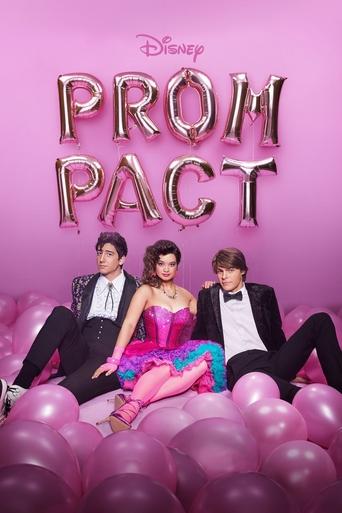
The newer ones are sharper comedies. Zapped gives a girl in a house full of stepbrothers a phone app that controls boys. How to Build a Better Boy has two science prodigies programme a perfect boyfriend who turns out to be a secret military project, Adventures in Babysitting, rated 7.2, sends two rival sitters into the city after a runaway child, and Prom Pact, also 7.2, follows a determined student who will do anything for a university place except, at first, enjoy herself. The school and teen page sorts them by kind.
True stories
Fourteen movies are true stories, and here the television film shows what it can do when a premium channel gives it time and a strong cast. Something the Lord Made, rated 8.0, is the highest-rated movie on Flood by a clear margin. It tells of the thirty-year partnership between Alfred Blalock, a white surgeon played by Alan Rickman, and Vivien Thomas, a Black carpenter's son who became his laboratory technician and, self-taught in the laboratory, devised the operation that saved the lives of thousands of children born with heart defects. The film is as much about what Thomas was denied as about what the two men achieved, and it does justice to both.
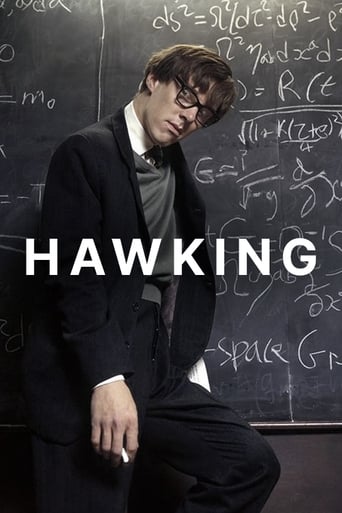
Door to Door, rated 7.4, stars William H. Macy as Bill Porter, a man with cerebral palsy who was told he was unemployable and became the leading door-to-door salesman in the north-west of the United States by walking ten miles a day for forty years. Marvellous is the equally cheering story of an Englishman who made his own place in the world, and Hawking follows the young physicist through the two years in which he received his diagnosis and made his first great discovery.
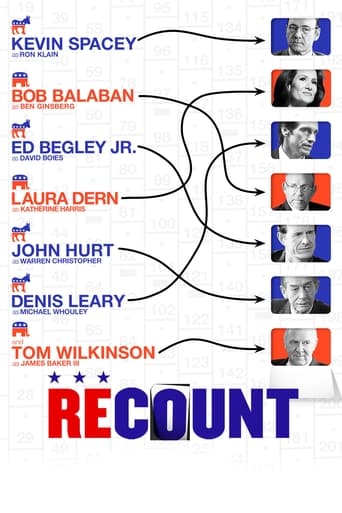
Politics is the other strength of the form. Recount reconstructs the thirty-six days after the American presidential election of 2000, when the result hung on a few hundred votes in Florida, and makes legal procedure as tense as a thriller. Oslo dramatises the secret talks, arranged by a Norwegian couple, that led to a historic handshake in 1993. The Special Relationship studies the friendship between a British prime minister and an American president, and Iron Jawed Angels the young women who picketed the White House for the vote and went to prison for it.
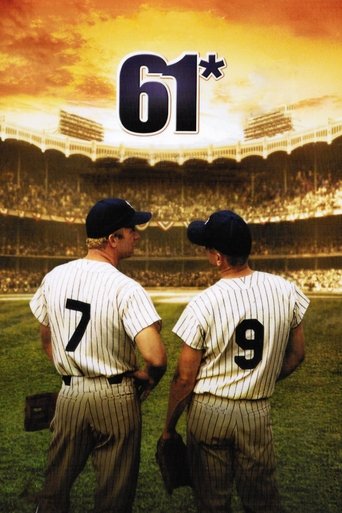
The arts supply the rest: RKO 281, about the making of Citizen Kane and the newspaper magnate who tried to stop it; Elvis, the 1979 biography directed by John Carpenter with Kurt Russell in the title part; and 61*, about a famous summer of baseball. The Immortal Life of Henrietta Lacks tells of a woman whose cells, taken in 1951, transformed medical research, and of her daughter's search for the truth. The true stories page lists all fourteen.
Jane Austen on television
Six movies come from Jane Austen or from her long shadow. Three were made together for British television in 2007, each about ninety minutes long, and they are a fine way to meet the less familiar novels. Persuasion, rated 7.2, stars Sally Hawkins as Anne Elliot, who was persuaded at nineteen to refuse a penniless naval officer and meets him again eight years later, when he is rich, admired and apparently indifferent. It is the most autumnal of the novels, and Hawkins gives Anne a watchful stillness that makes the ending a real release.
Northanger Abbey has a young Felicity Jones as Catherine Morland, a clergyman's daughter whose head is so full of gothic novels that she suspects her host of murder, with Carey Mulligan as her flighty friend. Mansfield Park casts Billie Piper as Fanny Price, the poor cousin brought up in a great house. All three are briskly told and prettily filmed in English country houses.
The other three borrow Austen's plots for modern romance. Unleashing Mr. Darcy sets Pride and Prejudice in the world of dog shows, with Elizabeth as a handler and Darcy as a haughty judge. Christmas at Pemberley Manor makes her an event planner and him the owner of an estate marked for sale, and Pride, Prejudice and Mistletoe swaps the roles, giving the pride to a successful woman who returns to her home town. The Jane Austen page lists the six.
Weddings
Eleven movies are built round a wedding, and since the ceremony itself is rarely in doubt, the comedy lies in how the couple get there. Pretence is the favourite route. In My Fake Fiance, two strangers short of money stage an engagement to collect the presents and find the performance hard to stop. In Holiday Engagement, a woman hires an actor to play her fiancé for a family Thanksgiving, and Accidentally Engaged lets a struggling actress borrow a film star for a home-town wedding.
Second thoughts are the other route. The bride of Bridal Wave takes a walk on the beach a few days before her wedding and meets a man who asks better questions than her groom. Yes, I Do concerns a chocolatier who has left the same patient man at the altar three times. I Do, I Do, I Do traps a doubtful bride in a repeating wedding day until she works out what she wants, and A December Bride, rated 7.1, begins with an invitation to the wedding of a cousin and a former fiancé. In A Country Wedding, rated 6.8, a country singer engaged to a film star goes home to Texas to sell the family ranch and meets the girl he once married in a childhood game in the hayloft. See the weddings page.
Music
Twenty-two movies carry music, and besides the school musicals already described there are several of a different kind. Elvis, from 1979, was made only two years after its subject's death, and Kurt Russell's performance, from the shy Mississippi boy to the comeback in Las Vegas, was the first serious attempt to play him; at 168 minutes it is the second-longest film on the site. Star, from 1993, follows a ranch girl who becomes a singing star, across three decades.
The younger musicals keep coming. Lovestruck: The Musical turns a disapproving mother, a former dancer, into her twenty-year-old self for the weekend of her daughter's wedding in Italy. Radio Rebel is about a painfully shy girl who is, in secret, the most popular voice on the local airwaves. Stuck in the Suburbs hands two bored friends a pop star's lost telephone, and Center Stage: On Pointe returns to a famous ballet academy. Camp Rock 3 brings the summer camp up to date. The music page has the list.
Wishes and magic
Twenty-two movies contain some fantasy, and television handles it lightly. Beside the Christmas wishes there is science fiction for children: the space station of the Zenon films, the garage-built time machine of Minutemen, with which three outcasts set out to spare their classmates small humiliations, and the pocket universe of Splitting Adam, in which a boy with too many summer commitments copies himself. Invisible Sister makes one of two siblings vanish on Halloween, to the benefit of both.
Storybook fantasy has Cinderella, Snow Queen, Babes in Toyland and Alice Through the Looking Glass, a 1998 version with Kate Beckinsale as a mother who steps into the story she is reading aloud. Borrowed Hearts, from 1997, belongs to an older style, a gentle fable in which a businessman hires a single mother and her daughter to pose as his family and is visited by an elderly gentleman who may be more than he seems. The wishes and magic page arranges them.
Romance through the year
With 116 titles, romance runs through every current, and away from Christmas it follows the calendar. Spring belongs to weddings. Summer brings Summer Villa, in which a romance novelist and a chef, each hoping for solitude, are lent the same house in the south of France; Secret Summer, about a property appraiser in a small town with an arts festival; and Bottled with Love, rated 6.8, which begins with a letter in a bottle found by a man fishing with his son.
Autumn is the season of inherited houses and harvests. In All of My Heart, rated 6.9, a caterer and a Wall Street trader are each left half of a farmhouse in Pennsylvania, with a goat. Harvest Moon sends a city girl to a struggling pumpkin farm her father owns, and Love Finds You in Valentine to a Nebraska ranch. February has All Things Valentine and Love, Romance & Chocolate, in which an American accountant in Bruges helps a chocolatier compete for a royal appointment.
A few romances are for grown-ups and are among the best things here. The Girl in the Café, rated 7.0 and written by Richard Curtis, begins as a shy courtship between a lonely civil servant, played by Bill Nighy, and a young woman he meets over tea, and becomes something larger when he takes her to an international summit in Iceland and she speaks her mind to the politicians at dinner. Remember Sunday, rated 7.1, is about a waitress who falls for a gentle man in a jewellery shop and then learns that, since an illness, he can hold on to only one day of memory at a time. Sundays at Tiffany's gives a bride-to-be a visit from the imaginary friend of her childhood, now grown. The romance page sorts the whole list.
Family viewing
Sixty-three movies carry the Family label. The classics come first. Anne of Green Gables, rated 7.2, is a 2016 version of the Canadian novel, with Martin Sheen as Matthew Cuthbert, the shy farmer who sends for a boy to help on the farm and is sent, by mistake, a talkative red-haired girl. Cinderella and Babes in Toyland have been family fixtures for decades.
The comedies are built for a sofa of mixed ages. Adventures in Babysitting was the hundredth original film from its channel and was made to celebrate the fact. Billboard Dad stars the Olsen twins as sisters who advertise their widowed father on a giant sign above Sunset Boulevard. Rent-a-Kid, from 1995, has Leslie Nielsen as a man who lends three orphaned siblings to a couple for a trial week, and School of Life is about a history teacher so popular that the staff room turns against him. Cow Belles sends two spoiled sisters to work in the family dairy, and Hatching Pete hides the shyest boy in school inside the chicken costume of the team mascot.
Sport and animals supply the rest: Cloud 9 on the snowboard slopes, Horse Sense on a Montana ranch, Den Brother, in which a suspended hockey star takes over his little sister's scout troop, and Rip Girls, about a girl who learns to surf, and learns about her mother, on a visit to Hawaii. The family page lists them all.
What a television movie does well
It is worth asking why these films exist and why so many people love them. A cinema release has to persuade strangers to leave the house and pay; a television movie arrives in the living room and has only to be good company for ninety minutes. That changes everything about how it is made. The stories are simple and clearly told, the settings are places an audience would like to visit, and the endings keep their promises.
The form has its own craft. A seasonal romance is typically filmed in three weeks, often in summer, with snow machines running in the heat, and the best directors of the genre, several of whom have six or seven titles on Flood, know exactly how to make a small town look like a snow globe. The actors return year after year and are greeted by viewers like old friends. The prestige dramas work differently, with longer schedules and distinguished casts, but they share the same closeness to their audience: Something the Lord Made and Recount were made to be watched at home and talked about afterwards.
Comfort is the word most often used, and it is fair. But the form has room for surprise as well: a Christmas musical with fourteen songs, a Jane Austen heroine running through the streets of Bath, a school comedy that turns out to be about standing up for what is right. The catalogue was chosen to show that range.
Small towns and snowy squares
The settings of these movies are a world in themselves. There is the small American town with a gazebo on the green, a diner, an inn and a tree-lighting ceremony, which goes by many names: Evergreen, Christmas Creek, Angel Falls, Green River, Pleasant Valley. Most of them were filmed in the same handful of real towns in Canada, and regular viewers learn to recognise a certain bridge or bandstand from one film to the next.
There are the invented kingdoms, played by castles in Romania and Ireland. There are the great houses: the mansion in North Carolina where A Biltmore Christmas was shot is real and can be visited. And there are the foreign postcards, Bruges in Love, Romance & Chocolate, Provence in Summer Villa, the South African bush in Love on Safari, Tuscany in Lovestruck: The Musical, Tokyo in iCarly: iGo to Japan.
The dramas go to real places with real histories: the operating theatres of Baltimore in the 1940s, the Florida courtrooms of 2000, the suffrage parades of Washington in 1913, a Norwegian manor house where enemies learned to share a dinner table. Part of the appeal of the form is this easy movement between a world as it ought to be and the world as it was.
Familiar faces and steady hands
Television movies have their own stars. Lacey Chabert, with nine titles, is the best known; she has played a seamstress, a florist, a web designer, a caterer and an accountant, and brings the same warmth to all of them. Danica McKellar, Merritt Patterson, Chad Michael Murray and Brooke D'Orsay have three each, and Jesse Metcalfe, Luke Macfarlane and Ryan Paevey are among the reliable leading men. Candace Cameron Bure, Alexa PenaVega, Jodie Sweetin and Melissa Joan Hart, all of whom grew up on television, returned to it as leads.
The school films launched a generation: Zac Efron and Vanessa Hudgens in High School Musical, Demi Lovato and the Jonas Brothers in Camp Rock, Zendaya in Zapped, Sabrina Carpenter and Sofia Carson in Adventures in Babysitting, Dove Cameron in Cloud 9, Ross Lynch on the beach. The dramas attracted performers of the first rank, among them Alan Rickman, William H. Macy, Hilary Swank, Michael Sheen, Oprah Winfrey, Bill Nighy, Sally Hawkins and Benedict Cumberbatch.
Behind the camera, Ron Oliver directed six of the movies here and Paul Hoen five, most of them for young audiences. Kenny Ortega made the first two High School Musicals and one of the Cheetah Girls films, and Peter DeLuise and David Winning have four each. Any of these names can be typed into the search field.
Three eras
The catalogue runs from 1979 to today and falls into three periods. Forty-six movies date from before 2010. They include the oldest prestige dramas, the first wave of children's originals at the turn of the century, and the three Austen films. Fifty-five come from 2010 to 2015, when the seasonal romance grew from a handful of titles a year into an industry; the year 2015 alone supplies twenty-two.
Seventy-nine movies date from 2016 onward. Streaming services joined the broadcasters in these years, budgets rose, and the casts became more varied, while the essential promise stayed exactly as it was. The page on the three eras names a few from each.
Going home
If one idea unites the romances, it is the return. A character who left a small place to succeed in a large one comes back, for a funeral, a wedding, an inheritance or a snowstorm, and sees the old life with new eyes. The Christmas Contract sends a web designer home to Louisiana for the first Christmas since a painful break-up. Return to Christmas Creek, Christmas Wonderland and Pride, Prejudice and Mistletoe all begin with a successful woman driving past a welcome sign she swore she had seen for the last time. A Country Wedding and Harvest Moon do the same for a singer and an heiress.
The films are honest enough to give the city its due. The heroines are good at their jobs and usually keep them in some form: the designer works remotely, the chef opens her own place, the journalist writes the story from the inn. What changes is the scale of their lives. They learn the neighbours' names, and somebody teaches them to make the local speciality. It is a modest dream, and a widely shared one, which is why the pattern can be repeated so often and still please.
Men make the journey too. The trader of All of My Heart arrives in the country with a telephone in each hand and ends up mending the roof. The prince of My Summer Prince is sent to a small American town to stay out of the newspapers, and the television star of Road to Christmas turns out to have three brothers and a mother he has been avoiding.
Friends, bands and teams
The school movies have a theme of their own, and it is belonging. Nearly all of them begin with characters shut inside a label, the athlete, the brain, the new girl, the boy at the back, and end with the labels broken. High School Musical made a song of the idea, sung in a cafeteria by pupils confessing secret hobbies. Lemonade Mouth takes it further: its five members are thrown together in a basement detention room, discover that they make a remarkable noise, and use their band to speak for everyone the school overlooks.
Frenemies tells three stories of friendships tested by ambition, one of them about a boy and his dog. Read It and Weep follows a girl whose private diary is published by accident and makes her famous under the name of her bolder alter ego. Picture This gives an overprotected girl a single evening to reach the party of the year, with a video phone and a great deal of ingenuity. Radio Rebel, Hatching Pete and Invisible Sister are all about shy people learning to be seen.
These films were made quickly and for a young audience, but they were made with care, and adults who watch them alongside their children are often surprised by how well the jokes and the songs hold up. Several of the songs, indeed, have outlived the films, and turn up at school concerts to this day.
Cocoa, cookies and chocolate
Food is the secret language of the television romance. A relationship is going well when two people are decorating gingerbread together and badly when one of them burns the first batch. Hot chocolate is drunk in nearly every Christmas film on the site, usually from oversized mugs on a porch. A Cookie Cutter Christmas turns a school baking contest into a duel between two teachers, The Sweetest Christmas enters a struggling pastry chef in a gingerbread competition, and Christmas Incorporated saves a toy factory with the help of the town's festive market.
Away from Christmas, Love, Romance & Chocolate spends most of its time in a Belgian chocolate kitchen, A Dash of Love in a restaurant where a young cook's recipes have been taken by her employer, and Love by Chance in a patisserie. Bottled with Love and Summer Villa feature long lunches out of doors. Viewers are advised to have something sweet within reach.
Women at the centre
It is worth noticing who these films are about. With few exceptions the leading character of a television romance is a woman, and the story is told from her side: her work, her family, her choice. The same is true of many of the school films, and of several of the dramas. Iron Jawed Angels is about the women who won the vote; The Immortal Life of Henrietta Lacks about a daughter's determination to learn her mother's story; Oslo gives as much credit to the diplomat's wife as to the diplomat; and Recount has its sharpest part in a Florida official suddenly famous across the world.
The Austen films and Anne of Green Gables come from novels by women about young women finding their place, and The Girl in the Café ends with a quiet woman saying what a room full of powerful men would prefer to leave unsaid. For an audience that often finds itself a secondary concern in the cinema, that steady attention is a large part of the appeal, and a large part of why the form inspires such loyalty.
A cinema of kindness
One last quality deserves a mention. Hardly anyone in these movies is truly wicked. The rival for the promotion turns out to have troubles of her own; the developer who wants to knock down the inn is brought round by a slice of pie; the stern queen was only frightened for her son. Conflicts are misunderstandings, and misunderstandings are cleared up by the simple act of two people telling each other the truth.
The true stories share the outlook in a more serious key. Door to Door is about a man who met unkindness every day and answered it with courtesy until a whole city knew his name. Marvellous is about someone who assumed the best of everybody and was usually proved right, and Something the Lord Made ends with a portrait hung, at long last, on a wall where it belonged. Whatever the season, that generosity of spirit is what the catalogue has most to offer.
It is also why these films travel so well. A viewer in Manila, Manchester or Mexico City recognises the snow-covered square and the school corridor at once, because the feelings on show, wanting to be seen, wanting to come home, wanting the people you love to be proud of you, are the same everywhere. The television movie is a modest form, but it speaks a common language, and that is a rarer achievement than it looks.
Careers on screen
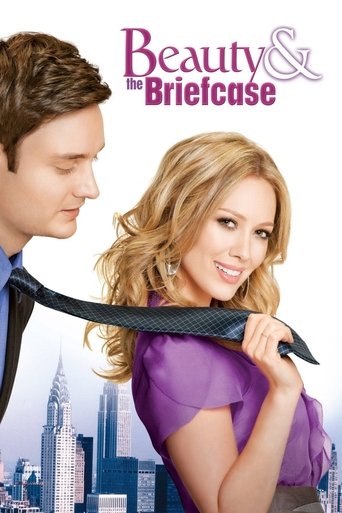
One of the quiet pleasures of these movies is the range of work they show. The heroines of the seasonal romances have jobs, and the films take a real interest in them: there are bakers, chocolatiers, caterers and pastry chefs, florists and toy-shop owners, architects and interior designers, vets and children's doctors, journalists, historians, app designers and at least one chiropractor. A Dash of Love is set in a restaurant kitchen, Love by Chance in a new bakery, A Novel Romance among writers and critics, Beauty & the Briefcase at a fashion magazine and My Perfect Romance at a technology firm that is building a dating application.
The films are usually on the side of the small business. A family shop, inn or farm is under threat from a chain, a developer or simple debt, and the plot turns on saving it. That gives the stories a modest moral weight: what is being defended is a way of working in which people know their customers by name. It is a fantasy, perhaps, but a generous one, and it explains why so many of these films end with a ribbon being cut.
The top rated list
Thirty-nine movies hold a rating of 6.8 or higher. Something the Lord Made leads at 8.0. Door to Door and Lemonade Mouth share second place at 7.4, with Rags at 7.3. Four stand at 7.2: Persuasion, Adventures in Babysitting, Prom Pact and Anne of Green Gables. Then come A December Bride, Hawking, Mingle All the Way, in which two sceptics are matched by a networking application for the holiday party season, Marvellous and Remember Sunday, all at 7.1.
The list is an even mixture of drama, school comedy and romance, which is a fair summary of the catalogue. The top rated page sets out the leaders.
Watching by season
Flood is easiest to use by the calendar. From late November, open the Christmas current and work down it; with eighty-three movies there is one for every evening until Twelfth Night and beyond. A sensible first week might be A Royal Christmas, Snowed Inn Christmas, The Christmas Train, Dolly Parton's Christmas on the Square and A Biltmore Christmas.
In February, try the weddings and the chocolate. In the school holidays, the teen current will keep a household of children busy for weeks, beginning with Lemonade Mouth and the two High School Musicals. On a quiet autumn evening, choose one of the true stories or a Jane Austen. And whenever a week has been long, the romance list is there, 116 titles deep.
The running time under each poster helps: the shortest movies last 78 minutes and most are under an hour and a half, which leaves the rest of the evening free. Save anything promising to My List as you browse.
What a movie page shows
Open any poster on Flood and the page that follows has four parts. First comes the heading block: the poster, the title, the year, the length in minutes, the genres and a paragraph telling the story, with the Watch now button and the button that saves the movie to your pool. Second is the Where to watch box, where you set the country whose services you wish to see.
Third is a table of facts, namely the original title, the date of first showing, the language, the country, the production company and the audience score with the number of votes behind it. Fourth is the cast, each name set beside a character, and the director. Further movies from the same current are listed last, so that a viewer who has finished Crown for Christmas is shown the next royal romance at once.
Questions and answers
Questions
What is Flood?
Flood is a guide to 180 movies made for television between 1979 and today. Each movie has a page with its cast, summary and rating, and a Watch now button that leads to the official services carrying it.
What kinds of movies are listed?
Christmas romances, royal romances, wedding comedies, school musicals and teen adventures, Jane Austen adaptations, light fantasies and true-story dramas. Every title was chosen by hand for a household audience.
How do I watch a movie?
Open its page, set your country in the Where to watch box and press the Watch now button. JustWatch then shows the subscription, rental, purchase and free services that carry the movie in that country.
How many Christmas movies are there?
Eighty-three, the largest current on the site, from Babes in Toyland in 1986 to A Biltmore Christmas in 2023.
Which movie is rated highest?
Something the Lord Made leads at 8.0, followed by Door to Door and Lemonade Mouth at 7.4.
Are there movies for children?
Yes. Sixty-three carry the Family label and twenty-nine sit in the School and teen current, among them High School Musical, Camp Rock and Adventures in Babysitting.
Does Flood list television series?
Flood lists movies only. Each is a complete story of about an hour and a half, first shown on television or made for a streaming service.
Why is the site called Flood?
The name suggests abundance, and the site takes its look from water: a wave for a logo, currents for lists and posters shaped like drops.
What is the pool?
My List is a pool of movies you plan to watch. It collects in the browser on the device in use, rises and falls as titles are added and removed, and can be poured out as a file from the list page.
Where does the information come from?
Posters, ratings, casts and production details come from TMDB. The guide on this page and the help pages are written for Flood.
